Author: cms.user

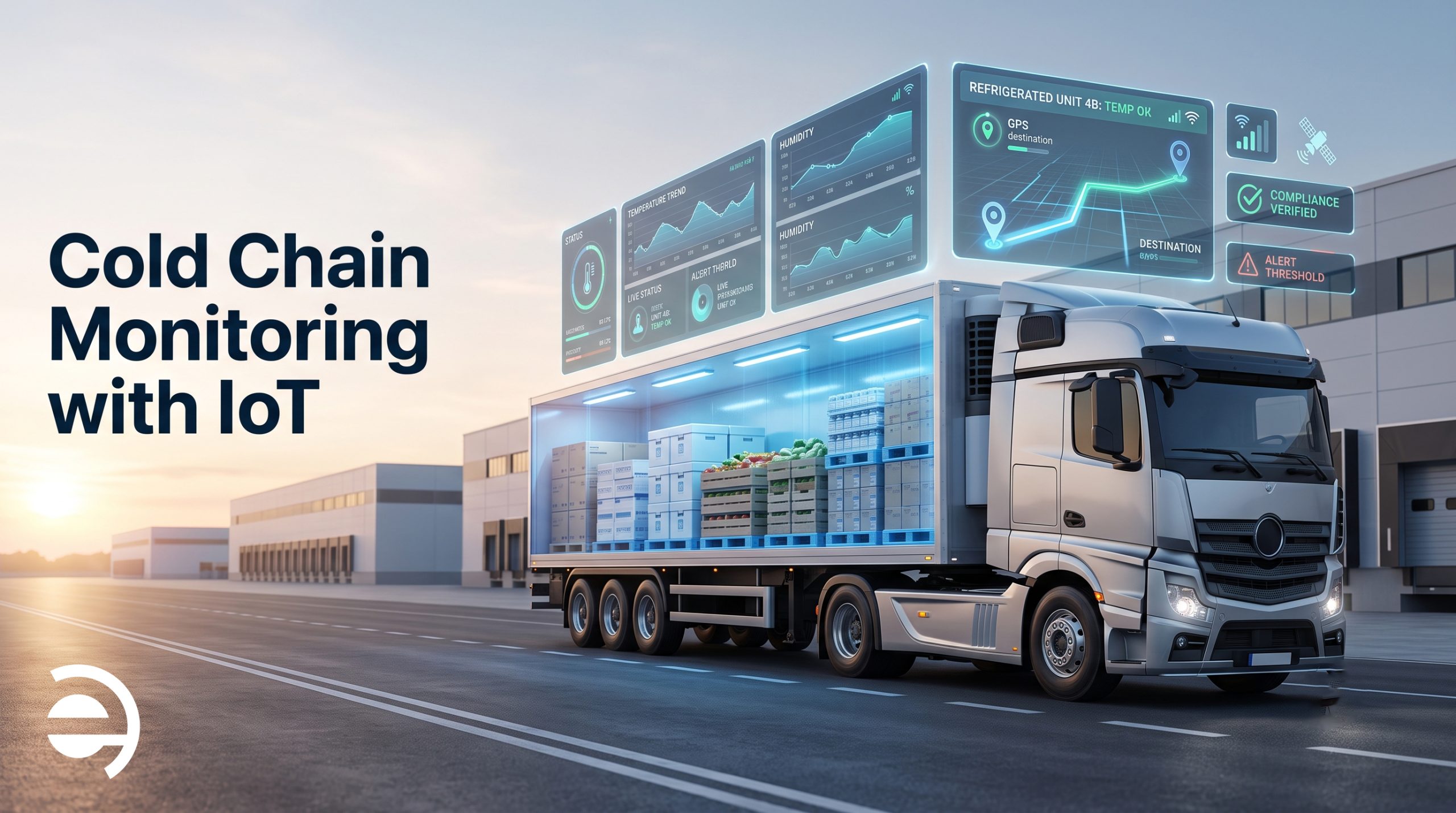
  • Cold Chain Monitoring with IoT: How Smart Sensors Are Protecting Sensitive Cargo

    Cold Chain Monitoring with IoT: How Smart Sensors Are Protecting Sensitive Cargo

    One four-hour temperature excursion inside a refrigerated truck can destroy an entire pallet of pharmaceuticals, ruin a shipment of fresh produce, or trigger a regulatory non-compliance incident worth far more than the cargo itself. For industries that depend on the integrity of temperature-sensitive products, the cold chain is not just a logistics function, it is a business-critical risk.

    IoT technology is transforming how organizations monitor and manage that risk. In this article, we explore how smart sensors and real-time monitoring platforms are reshaping cold chain operations and what logistics, food, and pharmaceutical teams need to know.

    What Is Cold Chain Monitoring?

    Cold chain monitoring is the continuous tracking of environmental conditions, primarily temperature and humidity, throughout the storage and transportation of perishable or temperature-sensitive goods. The goal is to ensure products remain within their required temperature range from origin to final destination, without any gaps in visibility or control.
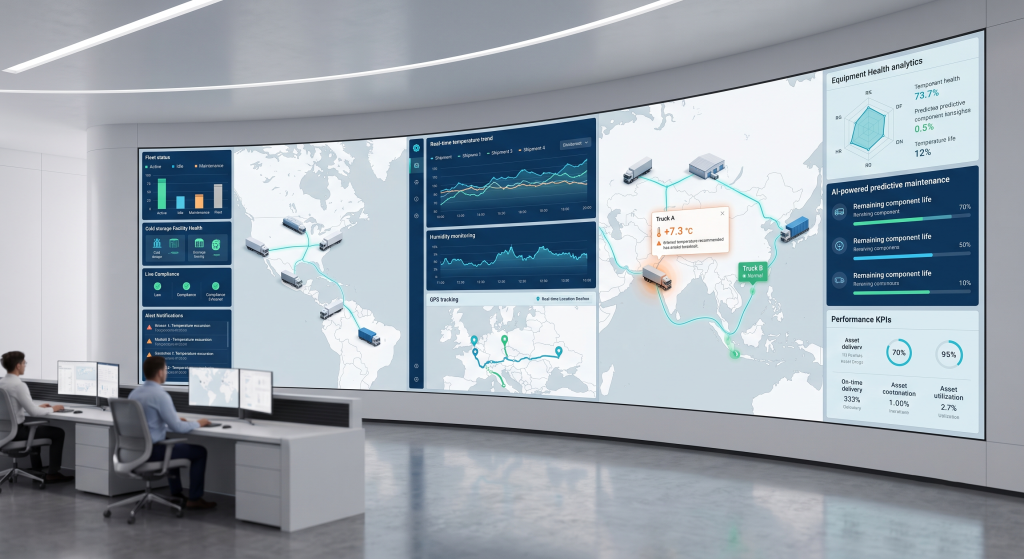
    Traditionally, this was done through manual logging and periodic checks. Today, IoT-enabled systems make it possible to monitor every stage of the cold chain in real time, from a warehouse shelf to a last-mile delivery vehicle.

    Why Cold Chain Failures Are Costly

    The numbers are significant. Temperature excursions account for approximately 14% of product losses in temperature-sensitive logistics globally. In the pharmaceutical sector, where even a brief deviation can render a batch non-compliant, the financial and regulatory consequences are far larger than the product value alone.

    On a broader scale, the UN Food and Agriculture Organization estimates that 526 million tonnes of food are lost or wasted every year partly due to insufficient refrigeration. For businesses, this translates directly into insurance claims, customer complaints, regulatory investigations, and damaged reputation.

    The global cold chain logistics market reached approximately $436 billion in 2025 and is forecast to grow to over $1.3 trillion by 2034 at a CAGR above 13%. As the market grows, so do the compliance requirements to make real-time monitoring not just a competitive advantage but an operational necessity.

    How IoT Transforms Cold Chain Monitoring

    IoT cold chain monitoring systems replace reactive, retrospective monitoring with continuous, proactive visibility. Here is how the technology works:

    Sensor Layer

    Calibrated temperature and humidity sensors are placed inside storage units, refrigerated vehicles, warehouses, and shipping containers. These sensors capture readings at configurable intervals, often every few seconds, and transmit data in real time.

    Connectivity Layer

    Modern cold chain IoT systems support multiple connectivity options to ensure no blind spots during transit:

    • 4G/5G cellular — Primary connectivity for vehicles and urban routes
    • NB-IoT / LTE-M — Low-power wide-area options for long-duration monitoring with extended battery life
    • Satellite — Backup connectivity for remote routes or ocean freight
    • Bluetooth gateways — Local data collection in warehouses and distribution centers

    Platform and Analytics Layer

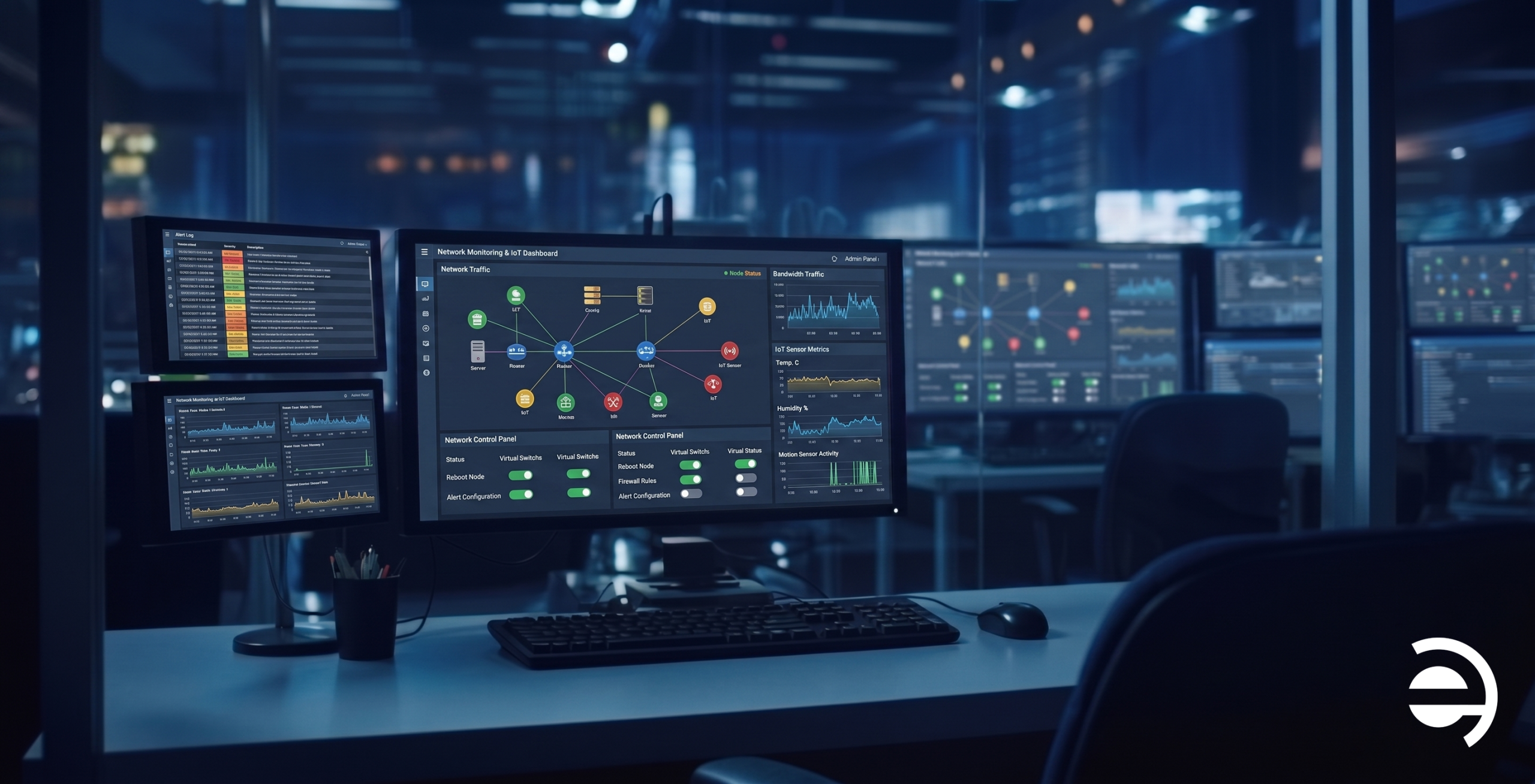
    Cloud-based cold chain management platforms aggregate sensor data into centralized dashboards. Operators receive real-time alerts when readings exceed defined thresholds, enabling immediate corrective action before products are compromised. AI-powered analytics go further, identifying patterns, predicting equipment failures, and flagging high-risk routes before excursions occur.

    By 2026, over 71% of commercial cold chain facilities globally operate real-time temperature monitoring systems, and cloud-based cold chain management software has reached 55% market penetration.

    Key Parameters to Monitor Beyond Temperature
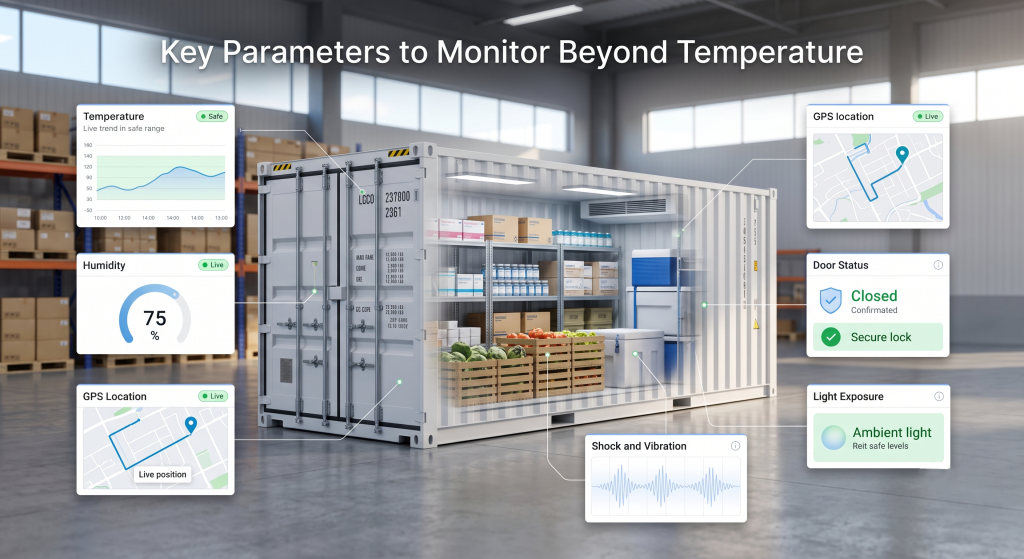
    Temperature is the primary concern, but a comprehensive cold chain monitoring system should also track:

    • Humidity: Critical for fresh produce, certain pharmaceuticals, and biological materials
    • Door open/close events: An open refrigerator door for even a few minutes can cause temperature spikes that compromise entire loads
    • Location and GPS tracking: Full visibility over vehicle position, estimated arrival times, and route adherence
    • Shock and vibration: Important for fragile pharmaceutical packaging or sensitive electronic components
    • Light exposure: Relevant for light-sensitive medications and biological samples

    Industry Applications

    Food and Beverage

    Fresh produce, dairy, seafood, and frozen goods all require precise temperature control throughout the supply chain. IoT monitoring enables producers, distributors, and retailers to detect excursions immediately, generate audit-ready compliance records, and reduce spoilage. Fleets deploying smart cold chain monitoring are cutting product loss by up to 30% compared to traditional manual operations.

    Pharmaceuticals and Healthcare

    The pharmaceutical cold chain is the most demanding environment for monitoring. mRNA vaccines, biologics, and clinical trial materials require ultra-cold storage with zero tolerance for deviations. IoT systems provide the continuous, automated documentation required under GDP guidelines, FDA 21 CFR Part 11, and WHO cold chain standards.

    Logistics and Distribution

    Third-party logistics (3PL) providers managing cold chain on behalf of multiple clients need platform-level visibility across entire fleets and warehouse networks. IoT monitoring systems with multi-client dashboards make it possible to manage compliance, SLAs, and reporting across complex, multi-stakeholder supply chains.

    What to Look for in a Cold Chain IoT Monitoring Solution

    When evaluating IoT cold chain solutions, logistics and operations teams should consider:

    • Sensor accuracy: Look for calibrated sensors with documented accuracy (±0.5°C or better for pharmaceutical applications)
    • Connectivity resilience: Multi-protocol support ensures continuous data flow even in low-coverage areas
    • Real-time alerting: Configurable threshold alerts by cargo type, not just one-size-fits-all notifications
    • Audit trail generation: Automated compliance documentation reduces manual reporting burden
    • Scalability: The system should handle growth from a single vehicle to a full fleet and warehouse network
    • Integration: Compatibility with existing ERP, WMS, or fleet management platforms

    How Elidiso Supports Cold Chain Operations
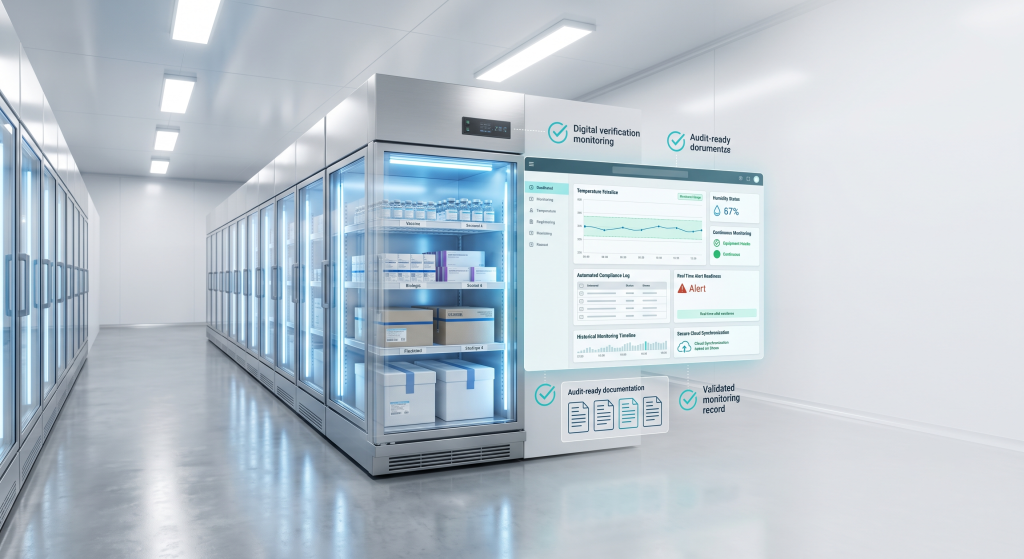
    Elidiso’s IoT environmental monitoring solutions include industrial-grade temperature and humidity sensors designed for demanding logistics and storage environments. Our hardware supports multiple connectivity protocols and integrates with leading cold chain management platforms, giving your team real-time visibility, automated alerts, and the compliance documentation your operations require.

    From pharmaceutical warehouses and food distribution centers to refrigerated transport fleets, Elidiso provides the monitoring infrastructure that keeps your cold chain under control.

    Contact Elidiso today to discuss your cold chain monitoring requirements and receive a solution tailored to your operations.

  • Enterprise ID Card Printing: A Complete Guide for HR and Admin Teams

    Enterprise ID Card Printing: A Complete Guide for HR and Admin Teams

    Every day, employees walk through doors, clock into shifts, and access secure systems using one small credential: their ID card. For HR and admin teams at growing enterprises, managing a professional, secure, and efficient ID card printing program is more than a convenience; it is a critical part of workplace security and operational continuity.

    Whether you are setting up an ID issuance program from scratch or improving an existing system, this guide covers everything you need to know, from choosing the right card printer to best practices for in-house badge issuance.

    Why Enterprise ID Card Printing Matters

    Employee ID cards serve a wide range of functions that go far beyond simple identification. In a corporate environment, a well-designed badge system can:

    • Control physical access to buildings, floors, and restricted zones
    • Track time and attendance automatically when integrated with HR software
    • Enable cashless payments in canteens or vending machines
    • Provide logical access to IT networks and workstations
    • Reinforce brand identity and a professional organizational culture

    For HR and admin teams, the challenge is not just what to print, but how to manage the entire lifecycle of a credential, from onboarding to offboarding.

    In-House vs. Outsourced Printing: Which Is Right for You?

    One of the first decisions HR teams face is whether to print ID cards in-house or outsource the process. Each approach has clear trade-offs.

    In-House Printing

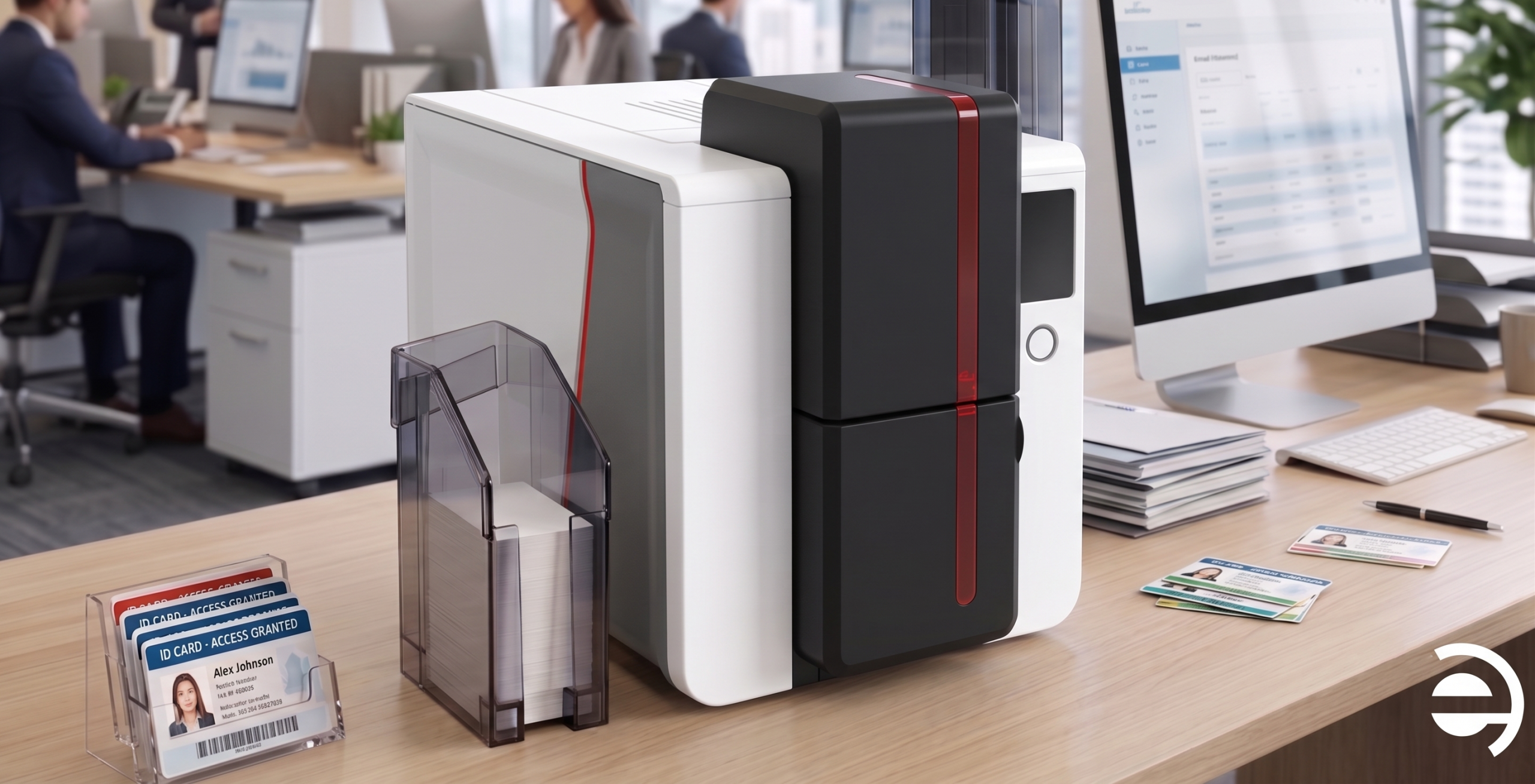
    With a dedicated card printer on-site, your team can issue badges quickly for new hires, lost card replacements, or temporary visitor passes. In-house printing also gives organizations greater control over sensitive employee data and can reduce recurring costs for organizations with regular card issuance needs.

    However, in-house printing requires suitable hardware, consumables, routine maintenance, and staff who can manage the printing process.

    Outsourced Printing

    For organizations with low issuance volumes or those without the resources to manage printing equipment, outsourcing can simplify operations. It allows organizations to obtain professionally printed cards without managing the printing process internally. The trade-off may be longer turnaround times and less flexibility when replacements or new cards are needed urgently.

    Recommendation: For organizations that regularly issue employee, student, membership, or visitor cards, the right approach depends on issuance volume, security requirements, turnaround time, and available resources. Reliable card printing services and professional printer maintenance can help organizations keep their card programs running smoothly.

    Choosing the Right ID Card Printer for Your Enterprise

    Not all card printers are built for the same environments. When evaluating a printer for an enterprise ID card printing program, HR and admin teams should consider the following key factors:

    1. Print Volume and Speed

    Entry-level printers are generally suited to smaller organizations with occasional printing needs, while higher-capacity models are designed for organizations that issue large numbers of cards. Actual speed and annual capacity vary by model, card design, and printing configuration.

    Match the printer to your current issuance requirements and expected growth. Schools, universities, gyms, and business centers should also consider seasonal demand, such as student registration periods, membership renewals, and employee onboarding.

    2. Print Technology: DTC vs. Retransfer

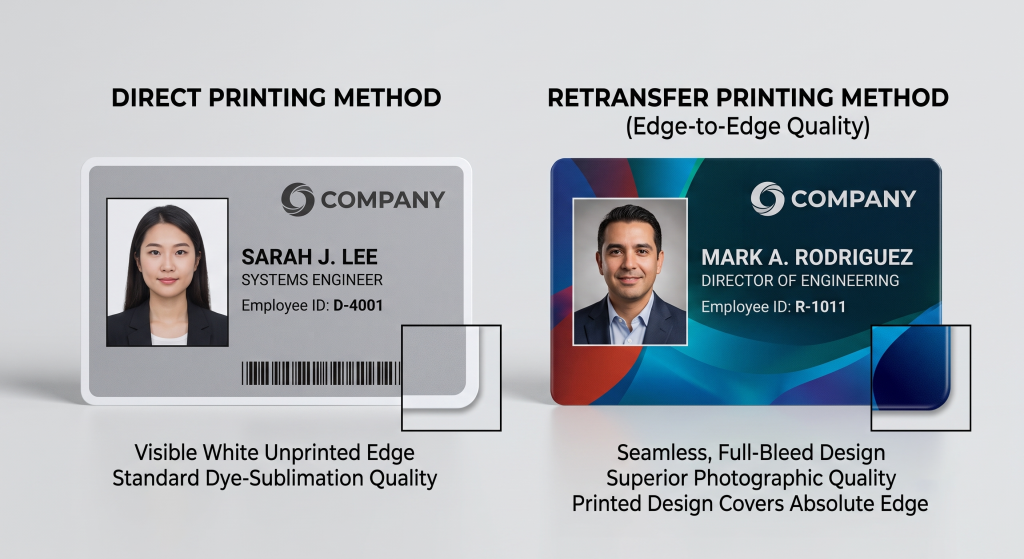
    Direct-to-Card (DTC) printing applies ink directly to the card surface. It is commonly used for standard employee photo ID badges and offers a practical solution for many everyday identification needs. Depending on the printer, card design, and printing process, a small unprinted border may remain around the card edges.

    Retransfer printing (HDP) first prints the design onto a clear film, which is then thermally fused to the card surface. This process can deliver edge-to-edge printing and is suitable for applications requiring detailed graphics or compatibility with certain smart cards.

    For organizations that need high-quality visual identification or cards with embedded chips, the appropriate printing technology depends on the card material, security requirements, and printer specifications.

    3. Encoding Capabilities

    Modern enterprise ID cards can support multiple functions beyond identification. Depending on the intended application, card systems may use:

    • Magnetic stripe: for compatible legacy access systems and time-tracking
    • Contact smart card: for secure logical access and supported authentication applications
    • Contactless (RFID/NFC): for compatible access control and tap-and-go applications
    • Barcode or QR code: for membership verification, inventory, canteen, or visitor management

    Before selecting a printer, confirm that it supports the card technology and encoding requirements of your existing access control or membership system.

    4. Security Features

    Enterprise environments should evaluate security features across the complete card issuance process, including:

    • Restricted access to blank card stock
    • Firmware security features, where supported
    • User authentication and audit logging in card issuance software
    • Security elements such as holographic overlays and UV printing, where appropriate

    The right combination depends on the sensitivity of the application and the risk of unauthorized card duplication.

    5. Software Integration

    Your card printing setup should work with the systems used to manage employee records, student information, memberships, access control, or visitor registration. Depending on the software, an issuance workflow may include photo capture, template management, data import, print queues, and credential activation.

    For schools, universities, gyms, and business centers, a well-organized workflow can simplify registration, membership renewals, and replacement card requests while reducing manual errors.

    Card Types: What Material Should You Choose?

    The physical card material affects durability, security, and overall card lifespan. Common options include:

    • PVC cards: The industry standard for many identification applications. Lightweight, affordable, and suitable for standard employee IDs, student cards, and membership cards.
    • Composite cards (PVC/PET): Designed to offer additional durability compared with standard PVC cards, making them suitable for demanding environments and frequent daily use.
    • Polycarbonate cards: Often used for high-security credentials. Certain polycarbonate cards support laser engraving and other durable personalization methods, making them suitable for applications with demanding security requirements.

    The best choice depends on how frequently the card will be used, the expected lifespan, the printing technology, and any access control or security requirements.

    Best Practices for an Enterprise ID Card Issuance Program

    Even with the right hardware, a poorly managed issuance program can create security gaps. Here are the best practices HR and admin teams should follow:

    Establish a Formal Badge Policy

    Define clear rules covering who issues badges, what information appears on each card type (employee, contractor, student, member, or visitor), how lost or stolen cards are reported and deactivated, and when cards must be returned or deactivated during offboarding.

    Train Staff on Proper Badge Usage

    Issuing a card is only the beginning. Employees, students, and members should understand the importance of not sharing credentials, reporting lost cards promptly, and following applicable access control policies. Clear instructions during onboarding or registration can help reduce avoidable security incidents.

    Conduct Regular Audits and Updates

    Enterprise card programs should be reviewed regularly to deactivate expired credentials, update employee or student information, and verify that the issuance process remains reliable. The frequency of these checks should reflect the organization’s size, security requirements, and card usage.

    Plan for Instant Issuance Scenarios

    Not all badges can be scheduled in advance. Visitor passes, new student registrations, membership cards, and lost card replacements may require immediate issuance. Organizations should plan a process that supports on-demand printing or quick access to a card printing service.

    Consider a Centralized vs. Distributed Issuance Model

    Larger organizations with multiple sites may benefit from centralized card management combined with printing capabilities at individual locations. This approach allows the organization to maintain consistent card templates and data policies while local HR, administration, or registration teams manage day-to-day issuance.

    How Elidiso Supports ID Card Printing and Maintenance

    Elidiso provides ID card printing services and card printer maintenance for organizations that need reliable identification cards and ongoing support for their printing equipment.to high-throughput systems for large-scale enterprise issuance.

    Our services are relevant to a range of organizations, including:

    • Schools and universities: Student ID cards, staff identification, and replacement cards
    • Gyms and fitness clubs: Membership cards for member identification and registration
    • Business centers: Employee, tenant, and visitor identification cards
    • Companies and organizations: Employee badges and other organizational identification cards

    In addition to card printing, Elidiso supports organizations with card printer maintenance to help address equipment issues and maintain reliable printing operations. Regular maintenance can help identify potential problems, reduce avoidable downtime, and support consistent print quality.

    Whether your organization needs cards for students, employees, members, or visitors, Elidiso can help with its card printing and maintenance requirements.

    Contact our team to discuss your ID card printing needs or inquire about card printer maintenance for your organization.

    Final Thoughts

    Enterprise ID card printing is not simply an HR administrative task; it is an important part of workplace security, operational efficiency, and professional identity. By selecting an appropriate printing setup, establishing clear issuance procedures, and maintaining reliable equipment, organizations can build a card program that adapts to their changing needs.

    For schools, universities, gyms, business centers, and enterprises, professional card printing and timely printer maintenance can help keep identification processes organized and dependable.

  • Energy and Utility Monitoring: Why Operators Can’t Afford Blind Spots Anymore

    Energy and Utility Monitoring: Why Operators Can’t Afford Blind Spots Anymore

    Energy and utility monitoring exists to catch a specific kind of risk: failures that don’t happen all at once. Power distribution and utility infrastructure rarely fail in a single dramatic event. They fail in small, measurable steps first, a voltage fluctuation lasting a few seconds, a load imbalance that grows slightly worse every week, a piece of equipment running a few degrees warmer than it should. Individually, none of these looks urgent. Together, over weeks or months, they’re often the early signature of a failure that eventually becomes urgent, expensive, and very public.

    Energy and utility systems carry a different category of risk than most monitored industries. A factory line going down affects one facility. A substation or distribution fault can affect a neighborhood, a hospital, and a water treatment plant at the same time. For utility operators, the margin for “we’ll catch it next time someone checks” is smaller than almost anywhere else.

    What Is Energy and Utility Monitoring?

    Energy and utility monitoring is the continuous tracking of power distribution, load conditions, and the physical and environmental status of utility assets, often across multiple sites, using sensors, gateways, and centralized software instead of periodic manual inspection. Unlike a smart meter, which only reports consumption, a full monitoring system tracks the operating conditions around that consumption: voltage and current fluctuations, equipment temperature, environmental conditions at remote sites, and the connectivity status of distributed assets like substations or pump stations.

    The Visibility Gap in Utility Infrastructure

    Most utility and energy operations already collect some data. Meters log consumption. SCADA systems track core operational parameters. The gap is rarely a total absence of data, it’s usually that the data lives in disconnected systems, gets reviewed on a delay, or only covers part of the operation.

    A few patterns show up repeatedly across utility infrastructure monitoring:

    • Power distribution and consumption are tracked, but voltage, current, and load fluctuations on individual circuits aren’t monitored closely enough to catch a developing problem before it trips a breaker or damages equipment.
    • Remote or unmanned sites, substations, pump stations, distributed generation assets, go unchecked for long stretches between physical visits, leaving the operator dependent on equipment simply not failing in the meantime.
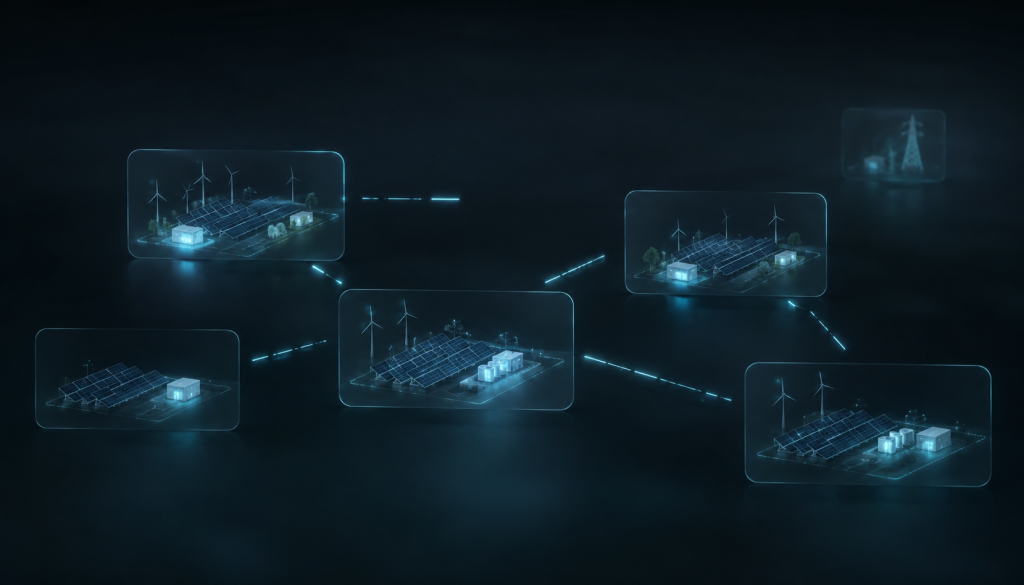
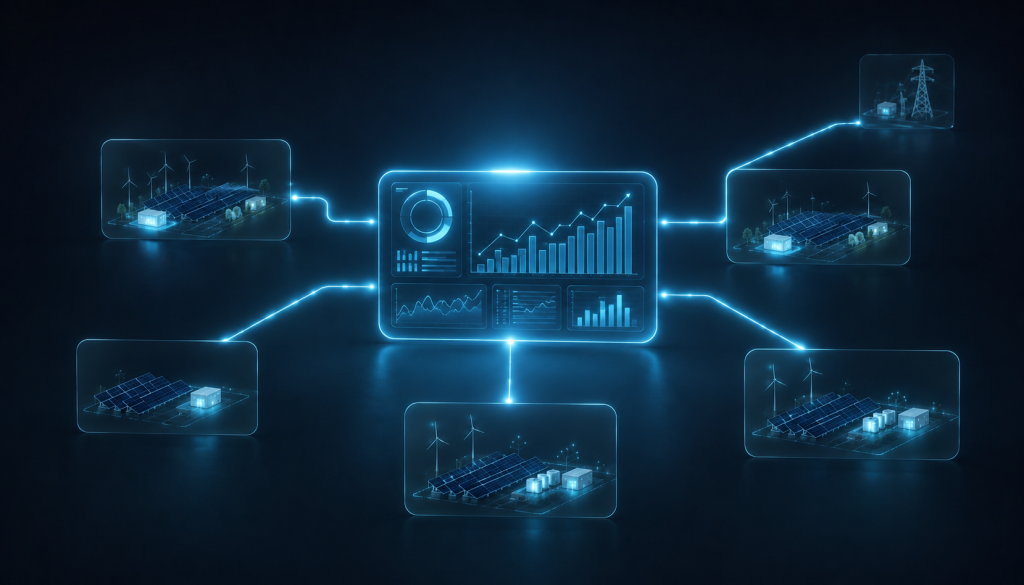
    • Utility assets are managed locally, site by site, instead of through one system that gives operations teams a consistent view across the whole network.

    None of these gaps come from negligence. They come from infrastructure built and expanded over years, often decades, with monitoring added incrementally rather than designed in from the start.

    How Real-Time Energy Monitoring Works

    The shift from periodic checks to real-time energy monitoring isn’t really about collecting more data. It’s about collecting the right data constantly enough that a developing problem is visible while it’s still developing, not after it’s already caused an outage.

    For energy and utility environments specifically, that means:

    Power distribution and load monitoring

    Tracking voltage, current, and load conditions continuously, so fluctuations that precede equipment stress or failure are caught early, rather than discovered through a tripped breaker or a damaged transformer.

    Remote and distributed asset monitoring.

    Substations, pump stations, and generation sites don’t need to depend on scheduled physical visits to report status. Sensors and connected gateways report continuously, even from locations with limited local network infrastructure.

    Centralized operational visibility.

     Bringing utility assets across multiple sites into a single monitoring dashboard means an operations team isn’t reconstructing the full picture from separate local systems during an active incident. The picture already exists, and it’s already current.

    Threshold-based real-time alerts.

    Limits set for each parameter mean that when a reading moves outside an acceptable range, the responsible team is notified immediately, not at the next scheduled inspection.

    Elidiso’s Approach to Energy and Utility Monitoring

    This is the same underlying architecture Elidiso applies across industrial and environmental monitoring more broadly: sensors collecting environmental and operational data, a gateway connecting devices across distances and protocols (including Modbus RTU and Modbus TCP) without requiring a full infrastructure overhaul, and monitoring software that brings everything into one real-time dashboard, with historical data and alerting built in.

    For energy and utility operators, that architecture addresses a specific version of a problem every monitored industry faces, one we covered in more general terms in What Is Environmental Monitoring and Why Businesses Can’t Ignore It in 2026: the risk that matters most is rarely the one you’re already watching closely. It’s the one quietly developing somewhere you’re not.

    The Real Question for Utility Operators

    The technology to monitor distributed energy infrastructure continuously already exists and is already in use across the industry. The open question for most operators isn’t whether to adopt it, it’s how much of their current infrastructure is still depending on scheduled checks for an outcome that depends on continuous awareness instead.

    If a voltage fluctuation started on one of your remote assets right now, how long would it take your team to find out?

  • What Is Environmental Monitoring and Why Businesses Can’t Ignore It in 2026

    What Is Environmental Monitoring and Why Businesses Can’t Ignore It in 2026

    Environmental conditions influence operations more than many organizations realize.

    Small changes in temperature, humidity, air quality, or surrounding infrastructure conditions can gradually affect performance, increase maintenance requirements, and introduce avoidable operational risk. In many environments, these issues are difficult to detect until they become costly.

    Environmental monitoring helps solve this problem. By collecting and analyzing environmental data continuously, organizations gain visibility into conditions that influence equipment performance, operational continuity, and decision-making. Rather than relying on periodic inspections or delayed reporting, monitoring creates a more proactive operating model.

    Today, environmental monitoring is increasingly becoming part of operational strategy rather than a standalone technical function.

    How Environmental Monitoring Works

    At its core, environmental monitoring is the continuous observation of conditions within an operating environment. Sensors measure selected variables and transmit data into a centralized platform where information can be viewed, analyzed, and used to trigger alerts when conditions move outside defined thresholds.

    Modern systems are designed to do more than display data. They help organizations identify trends, detect anomalies earlier, and respond before environmental changes begin affecting performance.

    Depending on the environment, monitored variables commonly include:

    • Temperature
    • Humidity
    • Air quality
    • Infrastructure conditions
    • Environmental changes surrounding critical assets

    This creates a more complete understanding of operational conditions over time.

    Why Businesses Are Investing in Environmental Monitoring

    Operational environments are becoming more connected, more distributed, and more demanding. As a result, organizations are looking for better ways to improve reliability while reducing manual oversight.

    Environmental monitoring supports these goals in several ways. Continuous visibility allows teams to identify changes earlier instead of reacting after disruption occurs.

    Real-time information improves operational awareness and supports faster decision-making. Automated monitoring also creates consistency across locations and reduces dependence on manual processes.

    Over time, this approach helps organizations improve reliability while maintaining greater control over operational conditions.

    Where Environmental Monitoring Creates the Most Value

    Environmental monitoring is used across a wide range of environments because stable operating conditions directly influence outcomes.

    Data-intensive environments rely on monitoring to maintain continuity and reduce avoidable interruptions. Industrial and production facilities use monitoring to support consistency and maintain operational standards. Warehousing and logistics operations benefit from improved environmental visibility across locations.

    Commercial environments increasingly use monitoring to support more efficient building operations and long-term infrastructure performance. Although operational goals vary, the objective remains the same: create earlier visibility and reduce uncertainty.

    Choosing the Right Monitoring Approach

    Selecting an environmental monitoring solution should begin with operational requirements rather than technical specifications.

    Organizations should evaluate whether a solution can scale with future needs, integrate with existing systems, provide meaningful reporting, and support timely response. The most effective monitoring platforms are not necessarily the ones that collect the most data, they are the ones that turn information into decisions.

    Conclusion

    Environmental monitoring has moved beyond simple measurement. It now plays an increasingly important role in helping organizations improve visibility, reduce operational risk, and operate with greater confidence.

    As operational environments continue to evolve, the ability to understand conditions in real time becomes less of an advantage and more of an expectation. Businesses that build monitoring into their operating model position themselves to make faster decisions, improve reliability, and create stronger long-term performance.

  • The Future of Efficiency: Why Industrial IoT Solutions are Essential in 2026

    The Future of Efficiency: Why Industrial IoT Solutions are Essential in 2026

    In 2026, the industrial landscape is defined by a shift from simple automation to intelligent, self-correcting systems. As global infrastructure becomes more complex, businesses are turning to Industrial IoT solutions to bridge the gap between data collection and physical action. But what does this integration actually look like on the factory floor and in the server room?

    For many companies, the primary hurdle is “data blindness”, having thousands of disparate data points but no clear picture of operational health. Industrial IoT solutions act as the central nervous system of a facility, integrating environmental sensors, telecommunication circuits, and edge hardware to provide a real-time pulse on your assets.

    By implementing robust Industrial IoT solutions, firms can transition from reactive troubleshooting to proactive optimization. This shift is critical: when you can monitor environmental variables, such as humidity, vibration, and heat, you aren’t just reacting to failures; you are preventing them.

    Modern smart infrastructure requires more than just basic connectivity; it demands intelligence. Through AI-assisted monitoring, we can now process visual and sensor inputs simultaneously to identify anomalies that humans, or traditional rule-based software, would inevitably miss.

    • Predictive Maintenance: Utilize Industrial IoT solutions to detect subtle vibration or temperature fluctuations in critical machinery long before a catastrophic failure occurs.
    • Energy Optimization: Leverage data-driven insights to manage power loads dynamically. In data centers, this means reducing cooling costs by adjusting airflow based on real-time server activity.
    • Operational Scalability: Deploy modular sensor nodes that grow alongside your business. Whether you are managing one server rack or a global network of facilities, our systems scale to meet the demand.

    Centralized cloud processing is often hampered by latency and security concerns. By utilizing edge computing within your Industrial IoT solutions, processing happens locally.

    Why does this matter?

    1. Latency: Critical decisions, such as emergency shutdowns, happen in milliseconds, not seconds.
    2. Bandwidth: You are only sending actionable insights to the cloud, rather than massive streams of raw data, reducing network costs.
    3. Sovereignty: Your sensitive operational data stays within your local network, a key requirement for secure industrial environments.

    Integrating Industrial IoT solutions is not a “plug-and-play” task. It requires a deep understanding of the underlying electronics. At Elidiso, we approach this through the lens of telecommunication circuit design and industrial hardware reliability.

    From high-precision sensor nodes that function in harsh industrial conditions to the software layers that visualize that data, every component must be calibrated for long-term stability. When you choose an industrial-grade partner, you aren’t just buying hardware; you are investing in the longevity of your entire infrastructure.

    At Elidiso, we specialize in delivering tailored Industrial IoT solutions that address the unique needs of your physical environment. Whether you are hardening your server room infrastructure or deploying AI-driven image processing for quality control, our goal is to provide the reliability and transparency you need to stay competitive.

    As we move further into 2026, the question is no longer if you should digitize your physical assets, but how fast you can implement the right Industrial IoT solutions to secure your future.