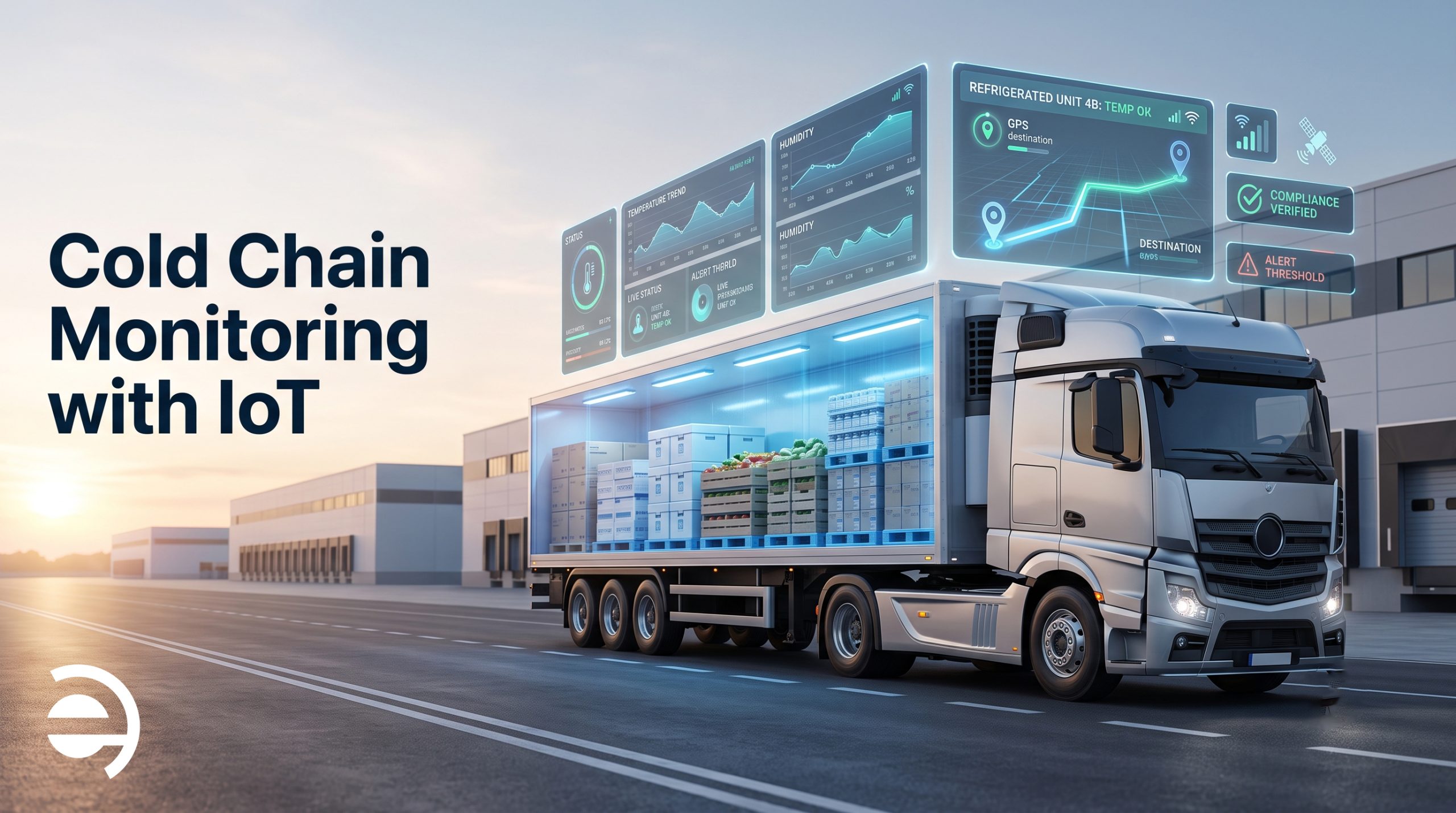
One four-hour temperature excursion inside a refrigerated truck can destroy an entire pallet of pharmaceuticals, ruin a shipment of fresh produce, or trigger a regulatory non-compliance incident worth far more than the cargo itself. For industries that depend on the integrity of temperature-sensitive products, the cold chain is not just a logistics function, it is a business-critical risk.
IoT technology is transforming how organizations monitor and manage that risk. In this article, we explore how smart sensors and real-time monitoring platforms are reshaping cold chain operations and what logistics, food, and pharmaceutical teams need to know.
What Is Cold Chain Monitoring?
Cold chain monitoring is the continuous tracking of environmental conditions, primarily temperature and humidity, throughout the storage and transportation of perishable or temperature-sensitive goods. The goal is to ensure products remain within their required temperature range from origin to final destination, without any gaps in visibility or control.
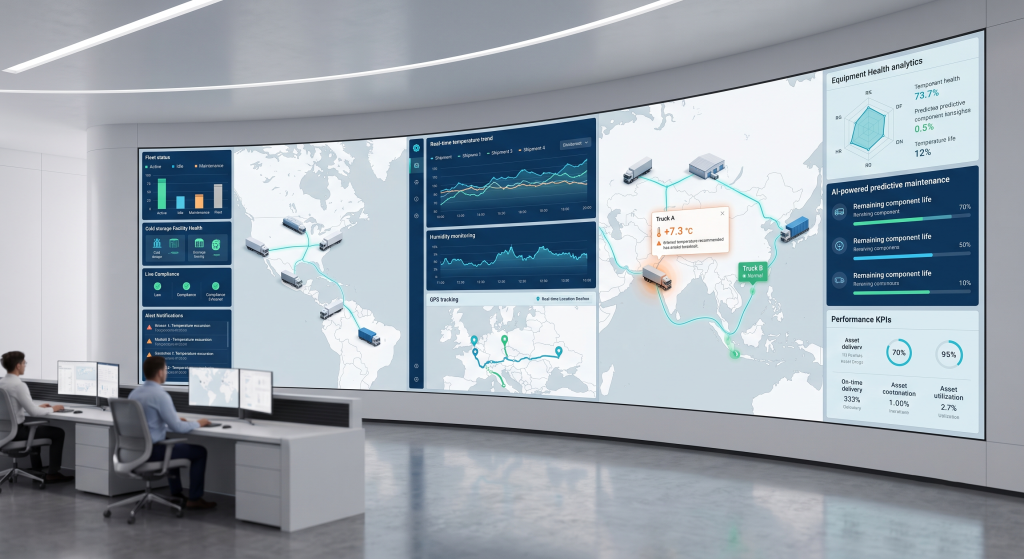
Traditionally, this was done through manual logging and periodic checks. Today, IoT-enabled systems make it possible to monitor every stage of the cold chain in real time, from a warehouse shelf to a last-mile delivery vehicle.
Why Cold Chain Failures Are Costly
The numbers are significant. Temperature excursions account for approximately 14% of product losses in temperature-sensitive logistics globally. In the pharmaceutical sector, where even a brief deviation can render a batch non-compliant, the financial and regulatory consequences are far larger than the product value alone.
On a broader scale, the UN Food and Agriculture Organization estimates that 526 million tonnes of food are lost or wasted every year partly due to insufficient refrigeration. For businesses, this translates directly into insurance claims, customer complaints, regulatory investigations, and damaged reputation.
The global cold chain logistics market reached approximately $436 billion in 2025 and is forecast to grow to over $1.3 trillion by 2034 at a CAGR above 13%. As the market grows, so do the compliance requirements to make real-time monitoring not just a competitive advantage but an operational necessity.
How IoT Transforms Cold Chain Monitoring
IoT cold chain monitoring systems replace reactive, retrospective monitoring with continuous, proactive visibility. Here is how the technology works:
Sensor Layer
Calibrated temperature and humidity sensors are placed inside storage units, refrigerated vehicles, warehouses, and shipping containers. These sensors capture readings at configurable intervals, often every few seconds, and transmit data in real time.
Connectivity Layer
Modern cold chain IoT systems support multiple connectivity options to ensure no blind spots during transit:
- 4G/5G cellular — Primary connectivity for vehicles and urban routes
- NB-IoT / LTE-M — Low-power wide-area options for long-duration monitoring with extended battery life
- Satellite — Backup connectivity for remote routes or ocean freight
- Bluetooth gateways — Local data collection in warehouses and distribution centers
Platform and Analytics Layer
Cloud-based cold chain management platforms aggregate sensor data into centralized dashboards. Operators receive real-time alerts when readings exceed defined thresholds, enabling immediate corrective action before products are compromised. AI-powered analytics go further, identifying patterns, predicting equipment failures, and flagging high-risk routes before excursions occur.
By 2026, over 71% of commercial cold chain facilities globally operate real-time temperature monitoring systems, and cloud-based cold chain management software has reached 55% market penetration.
Key Parameters to Monitor Beyond Temperature
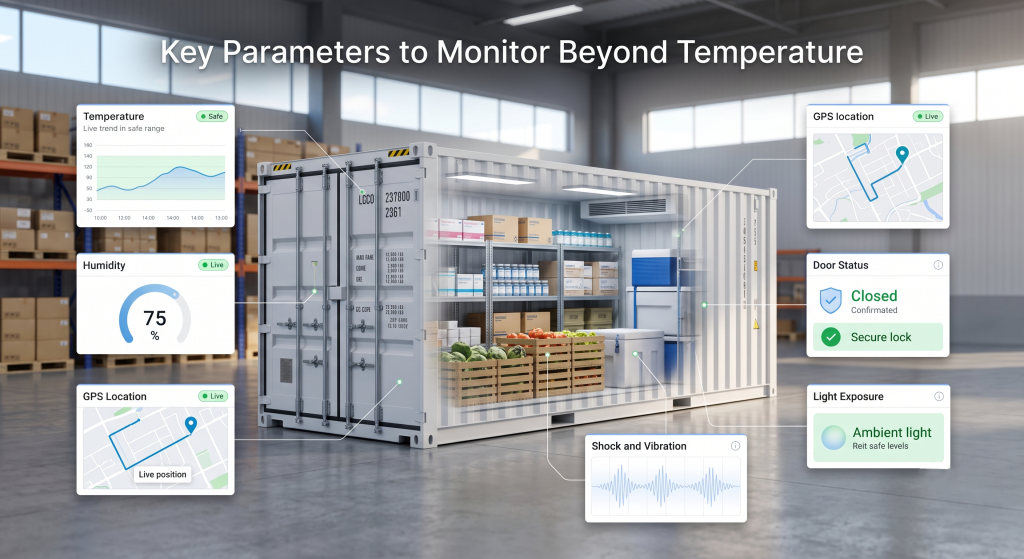
Temperature is the primary concern, but a comprehensive cold chain monitoring system should also track:
- Humidity: Critical for fresh produce, certain pharmaceuticals, and biological materials
- Door open/close events: An open refrigerator door for even a few minutes can cause temperature spikes that compromise entire loads
- Location and GPS tracking: Full visibility over vehicle position, estimated arrival times, and route adherence
- Shock and vibration: Important for fragile pharmaceutical packaging or sensitive electronic components
- Light exposure: Relevant for light-sensitive medications and biological samples
Industry Applications
Food and Beverage
Fresh produce, dairy, seafood, and frozen goods all require precise temperature control throughout the supply chain. IoT monitoring enables producers, distributors, and retailers to detect excursions immediately, generate audit-ready compliance records, and reduce spoilage. Fleets deploying smart cold chain monitoring are cutting product loss by up to 30% compared to traditional manual operations.
Pharmaceuticals and Healthcare
The pharmaceutical cold chain is the most demanding environment for monitoring. mRNA vaccines, biologics, and clinical trial materials require ultra-cold storage with zero tolerance for deviations. IoT systems provide the continuous, automated documentation required under GDP guidelines, FDA 21 CFR Part 11, and WHO cold chain standards.
Logistics and Distribution
Third-party logistics (3PL) providers managing cold chain on behalf of multiple clients need platform-level visibility across entire fleets and warehouse networks. IoT monitoring systems with multi-client dashboards make it possible to manage compliance, SLAs, and reporting across complex, multi-stakeholder supply chains.
What to Look for in a Cold Chain IoT Monitoring Solution
When evaluating IoT cold chain solutions, logistics and operations teams should consider:
- Sensor accuracy: Look for calibrated sensors with documented accuracy (±0.5°C or better for pharmaceutical applications)
- Connectivity resilience: Multi-protocol support ensures continuous data flow even in low-coverage areas
- Real-time alerting: Configurable threshold alerts by cargo type, not just one-size-fits-all notifications
- Audit trail generation: Automated compliance documentation reduces manual reporting burden
- Scalability: The system should handle growth from a single vehicle to a full fleet and warehouse network
- Integration: Compatibility with existing ERP, WMS, or fleet management platforms
How Elidiso Supports Cold Chain Operations
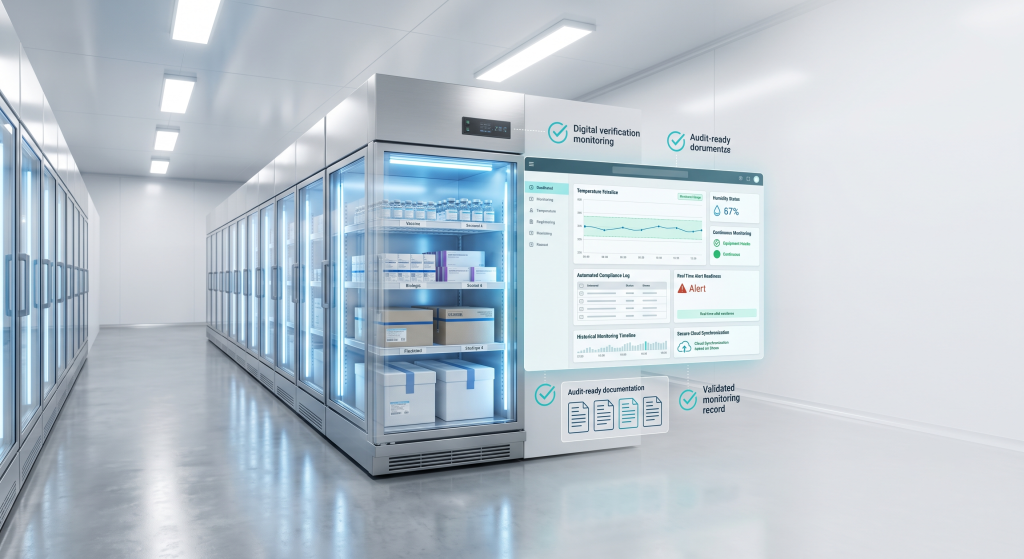
Elidiso’s IoT environmental monitoring solutions include industrial-grade temperature and humidity sensors designed for demanding logistics and storage environments. Our hardware supports multiple connectivity protocols and integrates with leading cold chain management platforms, giving your team real-time visibility, automated alerts, and the compliance documentation your operations require.
From pharmaceutical warehouses and food distribution centers to refrigerated transport fleets, Elidiso provides the monitoring infrastructure that keeps your cold chain under control.
Contact Elidiso today to discuss your cold chain monitoring requirements and receive a solution tailored to your operations.
Leave a Reply